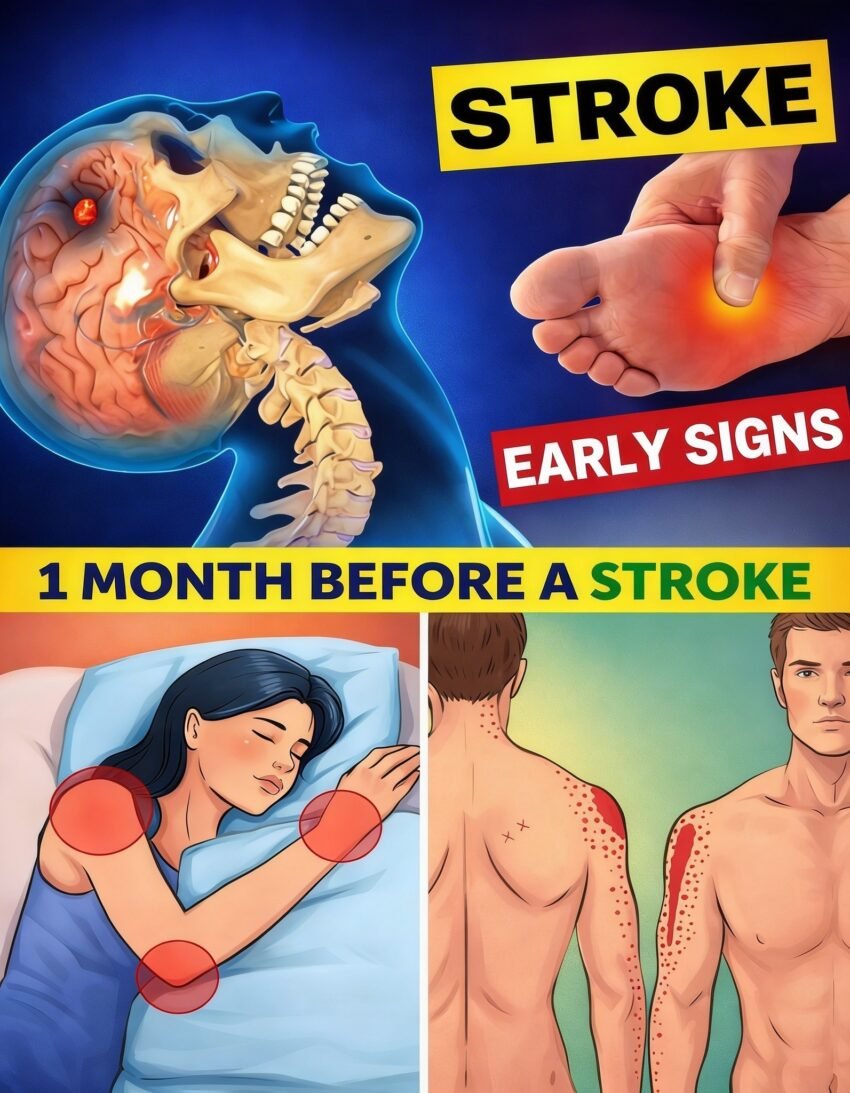
8 Warning Signs of Stroke That May Appear One Month Before:
-
Sudden, Severe Headaches
If you experience sudden, severe headaches that feel different from your usual headaches, this could indicate a risk of stroke. These headaches might be accompanied by neck pain or vomiting, suggesting a potential issue with blood flow to the brain. -
Frequent Dizziness or Loss of Balance
Dizziness or loss of balance that doesn’t have an obvious cause may signal a potential stroke. This may include feeling lightheaded or uncoordinated, and it could be due to changes in circulation or nerve function. -
Unexplained Weakness or Numbness
Experiencing sudden weakness or numbness, particularly on one side of the body (like in the face, arm, or leg), could be an early indicator of stroke risk. This could happen without warning or might come and go. -
Sudden Vision Problems
Blurry or double vision, or even partial vision loss, especially in one eye, can be signs of stroke. It may feel like your vision is “blinking” or “shaky,” which is often linked to disrupted blood flow in the brain. -
Trouble Speaking or Understanding Speech
Difficulty speaking clearly or understanding others could be a warning sign that your brain is not getting enough oxygen. If this happens suddenly, it could signal a mini-stroke (transient ischemic attack or TIA) or an impending stroke. -
Confusion or Trouble Thinking
Experiencing mental confusion, forgetfulness, or difficulty processing thoughts may indicate a stroke is brewing. You might feel unusually disoriented or like you can’t think clearly for no reason. -
Fatigue or Unexplained Tiredness
Extreme tiredness or fatigue that is unrelated to physical activity can sometimes be a sign of stroke risk. This could be due to decreased blood flow and oxygen to the brain, leading to feelings of exhaustion. -
Sudden Changes in Mood or Behavior
If you experience unusual mood swings, irritability, or depression without any obvious cause, it could indicate a risk of a stroke. The brain’s decreased blood supply can sometimes cause mood changes.
9 Tips to Prevent Stroke:
-
Manage Your Blood Pressure
High blood pressure is the leading cause of stroke. Regularly check your blood pressure and work with your doctor to maintain it at a healthy level. Eating a balanced diet, reducing salt intake, and exercising regularly can help control blood pressure. -
Maintain a Healthy Diet
A diet rich in fruits, vegetables, whole grains, and lean proteins can reduce the risk of stroke. Limit your intake of processed foods, unhealthy fats, and sugar, which contribute to obesity and high blood pressure. -
Exercise Regularly
Regular physical activity, such as walking, jogging, or swimming, strengthens the heart and improves circulation. Aim for at least 30 minutes of moderate exercise most days of the week to reduce your risk of stroke. -
Quit Smoking
Smoking increases the risk of blood clots and can damage blood vessels, significantly raising the likelihood of having a stroke. Quitting smoking is one of the most effective ways to reduce stroke risk. -
Limit Alcohol Consumption
Excessive alcohol intake can lead to high blood pressure and an increased risk of stroke. Men should limit alcohol to two drinks per day, and women should have no more than one. -
Control Your Cholesterol Levels
High cholesterol can lead to plaque buildup in the arteries, increasing the risk of stroke. A heart-healthy diet, exercise, and medication (if needed) can help keep cholesterol levels in check. -
Manage Diabetes
Diabetes increases the risk of stroke, as high blood sugar can damage blood vessels over time. Monitor your blood sugar levels and work with your healthcare provider to manage diabetes effectively. -
Take Blood Thinners (When Prescribed)
If you have a history of blood clots or atrial fibrillation (irregular heartbeat), your doctor may prescribe blood-thinning medications to help reduce the risk of stroke. Always follow your doctor’s instructions carefully. -
Know Your Family History
Genetics play a role in stroke risk. If you have a family history of strokes or heart disease, you should be extra vigilant in managing your health. Talk to your doctor about your family history and how it impacts your stroke risk.
What to Do If You Notice Stroke Symptoms:
If you experience any of the above warning signs, it’s important to seek medical attention immediately. F.A.S.T. is an acronym to help you remember the key symptoms of a stroke:
-
F: Face drooping
-
A: Arm weakness
-
S: Speech difficulty
-
T: Time to call emergency services
The quicker you act, the better your chances of minimizing damage from a stroke.
By staying aware of the potential warning signs and following these preventive tips, you can significantly reduce your risk of having a stroke. Early intervention and healthy lifestyle choices are key to maintaining your long-term brain health!