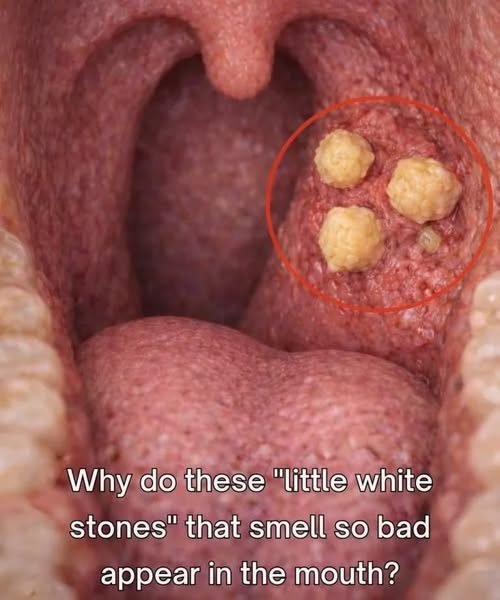
How Tonsil Stones Form
-
Tonsils are part of your body’s lymphatic system and help filter bacteria and other particles that enter your mouth. However, some particles, such as food, dead cells, and bacteria, can get trapped in the deep folds or crevices (crypts) of the tonsils.
-
Over time, these particles can harden and calcify, forming tonsil stones.
-
Tonsil stones can vary in size, from small, hard specks to larger, more noticeable lumps.
Symptoms of Tonsil Stones
-
Bad breath (halitosis): The most common symptom, caused by the bacteria that thrive in the tonsil stones.
-
Sore throat: Some people experience discomfort or a scratchy throat due to the presence of tonsil stones.
-
Difficulty swallowing: Larger stones can make swallowing feel uncomfortable or painful.
-
Visible white lumps: You may see the stones in the back of your throat, especially if they are large or near the opening of the tonsils.
-
Ear pain: This can occur due to referred pain, as the tonsils and ears are connected through the same nerve pathways.
Causes of Tonsil Stones
-
Poor oral hygiene: Not brushing or flossing regularly can increase the chances of food particles and bacteria getting trapped in the tonsils.
-
Chronic tonsillitis: Frequent inflammation of the tonsils can make them more prone to developing stones.
-
Dry mouth: Reduced saliva production can contribute to the accumulation of bacteria and particles in the tonsils.
-
Large tonsils: People with larger tonsils may have more crypts where debris can get trapped.
Treatment and Removal of Tonsil Stones
-
Gargling with saltwater: Gargling with warm saltwater can help loosen small tonsil stones and ease discomfort.
-
Oral hygiene: Brushing and flossing regularly, especially after meals, can help prevent the formation of tonsil stones by reducing the amount of debris in the mouth.
-
Water irrigation: Some people use a water flosser or oral irrigator to gently flush out tonsil stones from the crypts.
-
Manual removal: If the stones are visible and within reach, they can sometimes be gently removed with a cotton swab or a clean finger. Be careful not to hurt yourself or push the stones deeper.
-
Tonsillectomy: In rare cases, if tonsil stones are frequent, large, or cause significant issues, a doctor may recommend tonsil removal (tonsillectomy).
Preventing Tonsil Stones
-
Practice good oral hygiene: Brush your teeth, gums, and tongue at least twice a day, and floss daily to remove food particles and bacteria.
-
Stay hydrated: Drink plenty of water throughout the day to maintain healthy saliva production, which helps wash away debris in the mouth.
-
Gargle regularly: Gargling with saltwater or using an antibacterial mouthwash can help reduce the bacteria in your mouth.
-
Avoid smoking: Smoking can contribute to dry mouth and the accumulation of bacteria, increasing the risk of tonsil stone formation.
Tonsil stones are generally harmless, but if they cause persistent discomfort, bad breath, or difficulty swallowing, it might be worth consulting with a healthcare provider. They can assess the situation and recommend the most appropriate treatment. Let me know if you have any other questions or need more advice on managing tonsil stones!