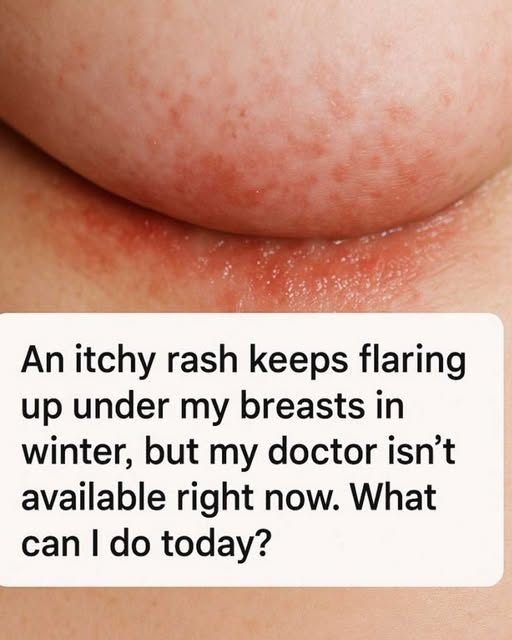
An itchy rash under the breasts, especially in winter, can be caused by a variety of factors, including dry skin, skin irritation, fungal infections, or eczema. Winter weather, with its low humidity and cold temperatures, can exacerbate skin dryness and irritation, and friction from clothing or sweat can also contribute to the problem.
Here are some steps you can take today to relieve the symptoms:
1. Keep the Area Clean and Dry
- Gently wash the area under your breasts with mild, fragrance-free soap and lukewarm water (avoid hot water, as it can dry out the skin).
- Pat the area dry with a soft towel, being careful not to rub it. Moisture trapped in skin folds can worsen irritation and fungal growth.
2. Moisturize the Skin
- Apply a fragrance-free moisturizer to the area after cleaning. Look for products with ceramides, petrolatum, or glycerin to help lock in moisture and restore the skin’s barrier.
- If the rash is due to dryness, a thicker moisturizer like Vaseline or Aquaphor can be especially helpful.
3. Use an Anti-Itch Cream or Lotion
- If the itching is bothersome, try applying a hydrocortisone cream (1% strength) to the rash. This can help reduce inflammation and itching.
- For mild eczema or irritation, calamine lotion or anti-itch creams containing menthol or pramoxine can help soothe the itching and calm inflammation.
- Note: Avoid using hydrocortisone for long periods, as it can thin the skin over time.
4. Avoid Tight or Irritating Clothing
- Wear loose-fitting, breathable clothing. Tight bras or synthetic fabrics can rub against the skin and worsen irritation.
- Opt for cotton bras or tank tops, and avoid wearing anything too tight or made from non-breathable materials like polyester.
5. Consider Fungal Infection Treatment
- If the rash looks red and scaly, or if it’s accompanied by flaking or small pustules, it could be a fungal infection like yeast (often caused by moisture buildup).
- Over-the-counter antifungal creams (such as clotrimazole or miconazole) can help treat this, especially if you suspect it’s a fungal issue. Apply the cream according to package instructions.
6. Keep the Area Cool and Dry
- If the rash tends to worsen with heat or sweat, try to keep the area as dry and cool as possible. Consider using absorbent powders (like cornstarch or baby powder) to help reduce moisture buildup.
- Avoid scratching, as it can introduce bacteria and make the rash worse.
7. Watch for New Symptoms
- If the rash continues to worsen or new symptoms develop, such as severe redness, pain, blistering, or pus, it could indicate a more serious condition that may need medical attention. In this case, it’s best to seek urgent care or visit a pharmacy for advice from a pharmacist.
What to Avoid:
- Harsh products: Don’t use anything with fragrance or alcohol, as these can irritate the skin further.
- Hot water: Hot showers or baths can dry out your skin, so opt for lukewarm water instead.
Long-Term Care (When Your Doctor Is Available):
- Eczema: If you suspect eczema, your doctor may recommend topical steroids or immunosuppressive creams.
- Fungal infection: If the rash is recurrent, you might need a longer treatment course with an oral antifungal medication.
- Skin irritation: If the issue is related to friction or sweat, making adjustments to your daily routine (e.g., wearing moisture-wicking fabrics and applying antifungal powder) might help prevent flare-ups in the future.
Next Steps:
- If the rash doesn’t improve with the above measures, or if you’re concerned about its appearance, it’s essential to get in touch with your doctor when they’re available for a more accurate diagnosis and treatment plan.
Let me know if you’d like more help or further tips while you wait to consult your doctor!