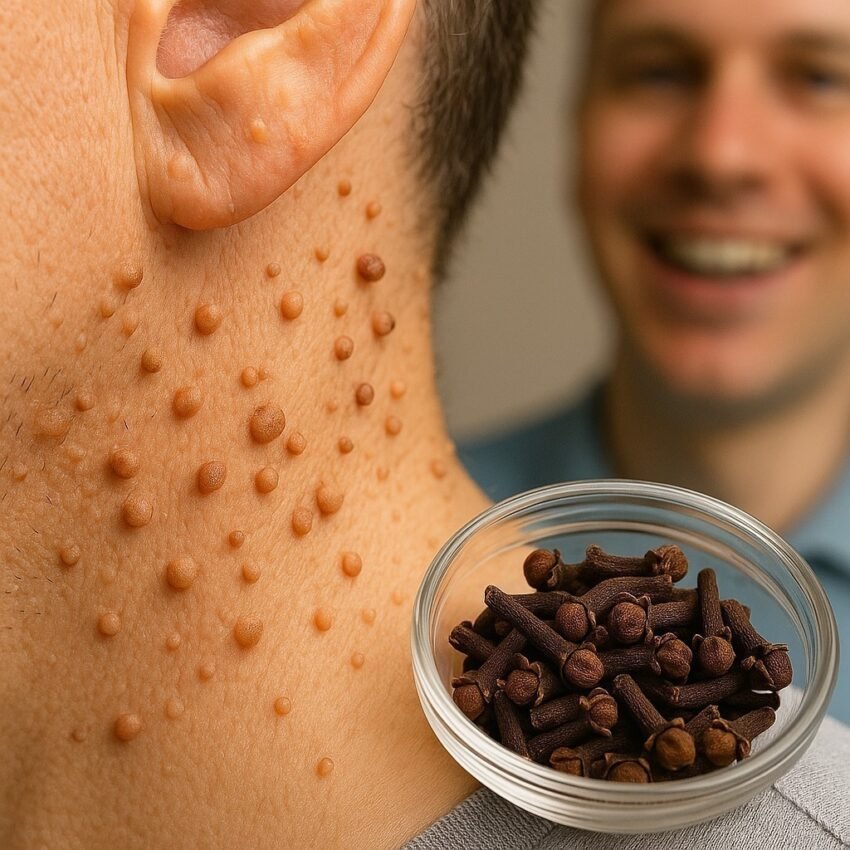
Here’s how clove may help with warts and blemishes:
1. Clove Oil for Warts
Warts are caused by the human papillomavirus (HPV) and typically appear as small, raised, rough growths on the skin. Clove oil’s antiviral and antimicrobial properties can help in treating warts by targeting the virus and preventing infection.
How to Use Clove Oil for Warts:
-
Dilute the oil: Always dilute clove oil with a carrier oil like coconut oil or olive oil (a 1:1 ratio). Pure clove oil is very strong and can irritate the skin if applied directly.
-
Apply to the wart: Use a cotton swab to apply the diluted clove oil directly onto the wart. Make sure the area around the wart is protected from the oil to avoid irritation.
-
Cover and leave it: You can cover the wart with a bandage to help the oil stay in place. Leave it on for a few hours or overnight.
-
Repeat: For best results, apply the clove oil treatment 1–2 times a day, and you may start seeing improvement after a few weeks.
2. Clove Oil for Skin Blemishes (Acne and Dark Spots)
Clove oil’s anti-inflammatory and antimicrobial properties can also be useful for blemishes, including acne and dark spots. It helps kill the bacteria that cause acne and reduces redness and swelling. Additionally, its antioxidant properties can help lighten dark spots and promote healthier skin.
How to Use Clove Oil for Blemishes:
-
Dilute the oil: As with warts, it’s important to dilute clove oil before applying it to your face or any sensitive skin areas. Mix 1-2 drops of clove oil with a teaspoon of a carrier oil (e.g., jojoba oil or tea tree oil).
-
Apply to affected areas: Use a cotton swab or a clean fingertip to apply the diluted mixture directly to acne or dark spots.
-
Leave it on: Let it sit for about 15-20 minutes. You can also leave it on overnight if it’s well-tolerated by your skin.
-
Moisturize: Follow up with a gentle moisturizer to keep your skin hydrated, as clove oil may dry out the skin if used too frequently.
3. Clove for Skin Infections
Clove oil’s antiseptic and antibacterial properties make it useful for preventing and treating minor skin infections or cuts. It can help reduce the risk of infection and speed up healing, making it another reason it’s a good choice for skin issues.
Precautions and Considerations:
-
Patch test: Always do a patch test before applying clove oil to a larger area of your skin. Apply a small amount of the diluted oil to a discreet area (like your inner forearm) and wait 24 hours to see if any irritation occurs.
-
Dilution is key: Clove oil is potent, so always dilute it with a carrier oil before using it on your skin. Overuse of undiluted clove oil can cause burns, irritation, or allergic reactions.
-
Avoid sensitive areas: Avoid applying clove oil around your eyes, mouth, or any mucous membranes. It can cause irritation in sensitive areas.
-
Pregnancy and children: If you’re pregnant, nursing, or have children, it’s best to consult a healthcare provider before using clove oil, as it can be too intense for some individuals.
Other Ways to Use Cloves for Skin Health:
-
Clove Tea or Powder: Drinking clove tea or adding clove powder to your diet can also support overall skin health due to its antioxidant properties. However, the effect will be more internal and gradual.
-
Clove-infused oil: You can also create your own clove-infused oil at home by adding crushed cloves to a carrier oil (like olive oil) and letting it sit in a dark place for a couple of weeks. This can be a gentler option than using pure clove oil.
Conclusion:
Clove oil can be an effective, natural remedy for warts and skin blemishes due to its antiviral, antibacterial, and anti-inflammatory properties. However, it’s important to use it with care—always dilute it, do a patch test, and avoid overuse. If you have persistent or severe skin issues, it’s best to consult with a dermatologist to ensure you’re using the right treatment for your skin type.