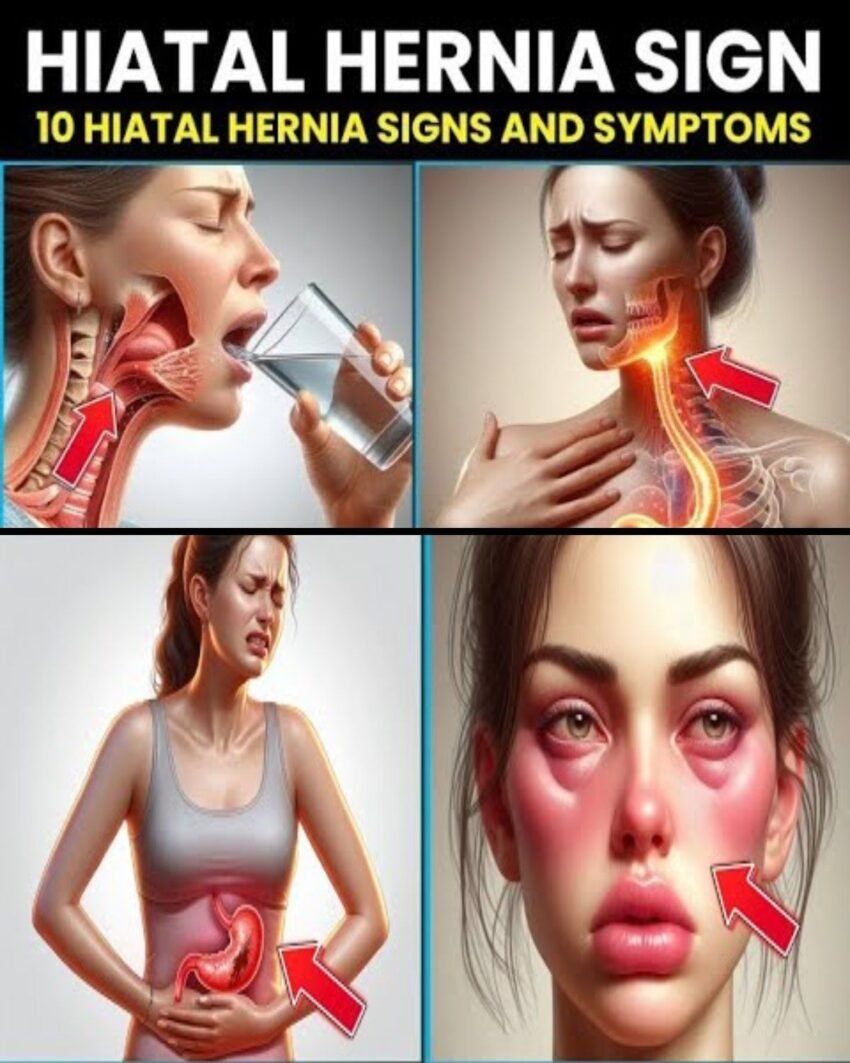
1. Heartburn
One of the most common symptoms of a hiatal hernia is frequent heartburn. This happens when stomach acid backs up into the esophagus, causing a burning sensation in the chest or throat.
2. Acid Reflux
Acid reflux or gastroesophageal reflux disease (GERD) is another key symptom. It occurs when stomach contents, including acid, flow back into the esophagus, leading to regurgitation and irritation.
3. Chest Pain
Chest pain can occur with a hiatal hernia, especially if acid reflux is present. This pain can sometimes mimic the discomfort caused by a heart attack, so it’s important to seek medical attention if it’s severe or persistent.
4. Difficulty Swallowing (Dysphagia)
A hiatal hernia may cause difficulty swallowing food, especially if the stomach bulge is pressing against the esophagus. This can lead to a sensation of food getting stuck or being hard to swallow.
5. Belching
Excessive belching or burping is another symptom, as air can get trapped in the stomach, especially after meals, causing discomfort and bloating.
6. Regurgitation of Food or Liquid
People with a hiatal hernia may experience regurgitation, where food or liquid moves up into the throat or mouth, even without vomiting. This is often accompanied by the sour taste of stomach acid.
7. Shortness of Breath
In more severe cases, the hernia can press on the diaphragm, which can make breathing more difficult and cause shortness of breath, particularly after meals or when lying down.
8. Fatigue
Chronic discomfort from heartburn, acid reflux, and other symptoms can contribute to feeling unusually tired or fatigued, especially if the condition disrupts sleep.
9. Sore Throat or Hoarseness
Stomach acid regurgitating into the esophagus can irritate the throat, leading to a sore throat, hoarseness, or a feeling of something being stuck in the throat.
10. Nausea or Vomiting
Some people with a hiatal hernia may feel nauseous, especially after eating, or they might vomit due to the increased pressure in the abdomen or reflux.
What Causes a Hiatal Hernia?
A hiatal hernia can develop due to several factors:
-
Aging: The diaphragm weakens and enlarges over time.
-
Obesity: Excess weight increases abdominal pressure.
-
Pregnancy: Pregnancy can lead to increased pressure in the abdomen.
-
Chronic coughing or straining: Repeated pressure increases the risk of a hiatal hernia.
-
Injury or trauma: Any injury that affects the diaphragm can lead to a hernia.
Treatment for Hiatal Hernia
Treatment for a hiatal hernia depends on the severity of symptoms. Here are common management options:
-
Lifestyle changes: Eating smaller meals, avoiding lying down after eating, and maintaining a healthy weight can help manage symptoms.
-
Medications: Over-the-counter or prescription medications for acid reflux, such as antacids, proton pump inhibitors (PPIs), or H2 blockers, can help reduce symptoms.
-
Surgery: In severe cases, surgery may be needed to repair the hernia and prevent reflux.
If you experience any of the symptoms above, it’s important to consult a healthcare provider for proper diagnosis and treatment.
Let me know if you’d like more details on treatment or ways to manage symptoms!