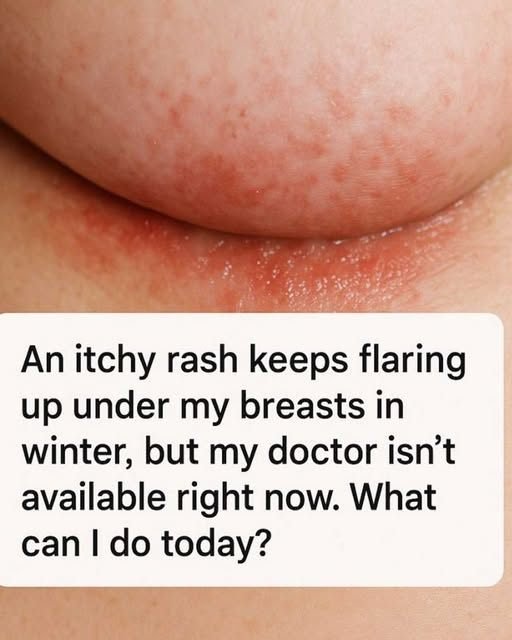
1. Keep the Area Dry:
Moisture can make irritation worse, especially under the breasts where skin folds. After washing, pat the area dry gently with a soft towel, and consider using talcum powder or a non-scented baby powder to help keep things dry throughout the day.
2. Use a Gentle Soap:
Avoid harsh soaps or body washes that contain fragrances or alcohol, as these can further irritate sensitive skin. Opt for a mild, hypoallergenic soap or a gentle cleansing gel.
3. Moisturize with a Fragrance-Free Lotion:
Dry skin can make itching worse, especially in winter. A fragrance-free, hypoallergenic moisturizer (like Cetaphil or Aquaphor) can help soothe and hydrate the skin. Look for a cream rather than a lotion for thicker coverage.
4. Cold Compress:
Applying a cold compress or ice pack (wrapped in a cloth) to the affected area can provide temporary relief from itching and inflammation. Do this for 10-15 minutes a few times throughout the day.
5. Over-the-Counter Hydrocortisone Cream:
If you’re not allergic to hydrocortisone, using a 1% hydrocortisone cream (available over the counter) may reduce inflammation and itching. Just be cautious about applying it for more than a couple of days without medical guidance.
6. Wear Loose, Breathable Clothing:
Tight bras or clothing can irritate the area and trap moisture. Opt for loose-fitting, breathable fabrics like cotton, and try to wear a soft, non-wire bra until the irritation improves. Make sure your bra isn’t too tight around the chest or under the breasts.
7. Avoid Scratching:
Scratching can make the rash worse and even lead to infection. If you can, try to resist scratching. You might want to keep the area covered to prevent irritation from rubbing against clothing.
8. Oatmeal Bath (optional):
If the rash is widespread, an oatmeal bath can help soothe your skin. You can use colloidal oatmeal, which is available in drugstores, or just put some regular oatmeal in a sock or muslin bag and hang it under the faucet while filling your bath.
What to Watch Out For:
-
If you notice blisters, pus, or the rash becomes increasingly painful, it could be a sign of an infection or something like fungal irritation (which is common in the breast area).
-
If the rash doesn’t improve after a few days or gets worse, it’s best to seek out medical attention as soon as your doctor is available.
Would you like more specific recommendations based on what the rash looks like, or do you feel like these tips might help for now?