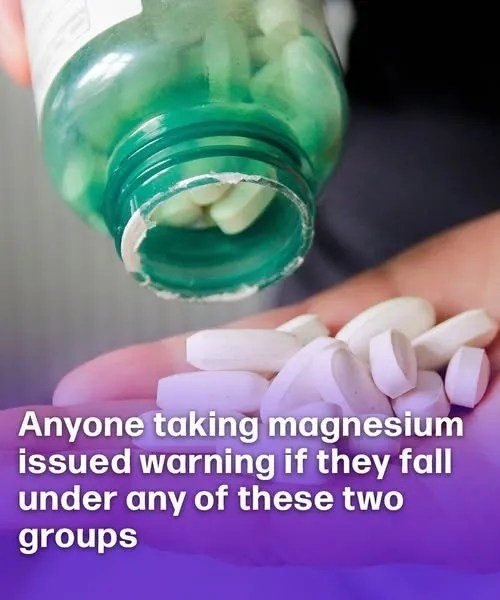
Recent health guidance and expert warnings about magnesium supplements focus on safety — especially because magnesium taken in pill form isn’t always harmless for everyone. Supplements are fine for many, but experts say some people are at higher risk of side effects or serious complications and should be cautious or avoid them entirely. (Office of Dietary Supplements)
⚠️ Two Main High-Risk Groups
1. People with poor kidney function
If your kidneys don’t work well — such as in chronic kidney disease (CKD) or significant renal impairment — they can’t remove excess magnesium from the blood. That can lead to magnesium buildup (hypermagnesemia), which can cause symptoms from nausea and low blood pressure to serious heart rhythm problems or even paralysis in extreme cases. (Office of Dietary Supplements)
2. People with certain heart or neuromuscular conditions
Magnesium can affect nerve transmission and heart rhythm. Those with heart block, arrhythmias, or neuromuscular disorders (like myasthenia gravis) may experience worsening symptoms if they take magnesium supplements without medical supervision. (Medx)
🧠 Other Situations Where Caution Is Advised
Experts also recommend consulting a doctor before supplementing if you:
- Are elderly — kidney function often declines with age and polypharmacy can increase risk. (Bolt Pharmacy)
- Are pregnant or breastfeeding — high supplemental doses may carry risks and should be supervised. (Cymbiotika)
- Have gastrointestinal conditions that affect absorption. (Cymbiotika)
- Take certain medications, like some diuretics, heart meds, or antibiotics, that interact with magnesium. (Healthline)
🧪 What Happens if You Take Too Much?
Taking magnesium above recommended amounts can cause:
- Gastrointestinal issues (diarrhea, cramps)
- Low blood pressure or irregular heartbeat
- Confusion, muscle weakness
- In severe excess — breathing problems or cardiac issues
The typical upper limit from supplements is around 350 mg/day for adults, not counting food sources. (Office of Dietary Supplements)
🧮 Bottom Line
Magnesium supplements can be helpful for deficiencies, sleep, cramps, or blood pressure — but they aren’t automatically safe for everyone. People with kidney impairment and those with heart or neuromuscular conditions are especially at risk and should not self-prescribe magnesium without medical advice. (Office of Dietary Supplements)