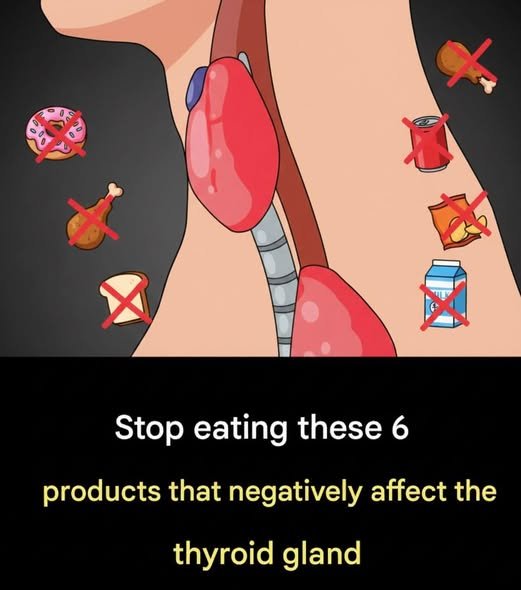
“Thyroid crisis” headlines are usually exaggerated — but diet can affect thyroid function, especially if you have hypothyroidism or hyperthyroidism.
First, a true Thyroid storm is a rare, medical emergency — it’s not caused by everyday foods.
However, certain foods can interfere with thyroid hormone production or medication absorption.
Here are 6 foods to be cautious with if you have thyroid issues:
1️⃣ Soy & Soy Products
- Soy may reduce absorption of thyroid medication (like levothyroxine).
- If you take thyroid meds, avoid soy within 3–4 hours of your dose.
2️⃣ Cruciferous Vegetables (in excess, raw)
Examples: broccoli, cabbage, kale, cauliflower.
- Contain goitrogens, which can interfere with iodine use.
- Usually only an issue if eaten raw and in very large amounts, especially with iodine deficiency.
- Cooking reduces the effect.
3️⃣ Excess Iodine
- Too much iodine can worsen both hypo- and hyperthyroidism.
- Be careful with kelp/seaweed supplements and high-iodine products.
4️⃣ Highly Processed Foods
- Often high in sodium and low in nutrients.
- Can worsen fatigue, inflammation, and weight gain in hypothyroidism.
5️⃣ Gluten (for some people)
- Those with Hashimoto’s thyroiditis may also have gluten sensitivity or celiac disease.
- Not everyone with thyroid disease needs to avoid gluten — testing matters.
6️⃣ Sugary Foods
- Blood sugar swings worsen fatigue and hormonal imbalance.
- Stable blood sugar = better energy.
⚠️ More Important Than Food
If your energy is low, the most common cause is:
- Incorrect thyroid medication dose
- Iron deficiency
- Low vitamin D
- Poor sleep
- Chronic stress
Food matters — but it’s rarely the sole cause.
If you’d like, tell me:
- Do you have hypothyroidism or hyperthyroidism?
- Are you on thyroid medication?
- What symptoms are you feeling (fatigue, weight gain, anxiety, hair loss)?
That way I can give you more specific guidance.