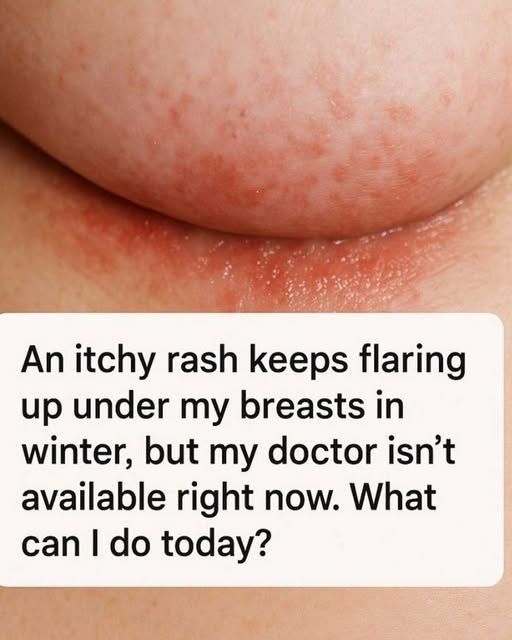
Itchy rashes under the breasts are a common issue, especially in winter, when the skin tends to get drier and more irritated due to cold air and indoor heating. This area can also be prone to friction, sweat, and moisture buildup, which can exacerbate the problem. While waiting to see your doctor, there are several steps you can take at home to help soothe the rash and prevent it from getting worse.
1. Keep the Area Clean and Dry
- Gently wash the area with mild, fragrance-free soap and lukewarm water (avoid hot water, as it can dry out the skin).
- After washing, pat the area dry with a soft towel. Be sure not to rub the skin, as this can make irritation worse.
- To prevent moisture buildup, you may want to use a blotting cloth or cotton pad to help absorb sweat or any excess moisture under the breasts.
2. Apply a Moisturizer
- Apply a gentle, fragrance-free moisturizer to the affected area to restore hydration. Look for products with ceramides, glycerin, or petrolatum, which help lock in moisture and create a barrier.
- If the rash is very dry and flaky, you may want to try a thicker ointment like Aquaphor or Vaseline, as these can help seal in moisture and provide relief.
3. Anti-Itch Cream or Lotion
- If the itching is severe, you can use a hydrocortisone cream (1%) to reduce inflammation and itching. Apply a thin layer of the cream to the rash area.
- Alternatively, calamine lotion or an anti-itch cream with menthol or pramoxine can also soothe the skin and alleviate itching.
4. Fungal or Yeast Infection Treatment
- If the rash looks red, scaly, or has patches of white or yellow discharge, it could be a fungal infection (like yeast). The skin folds under the breasts can be a breeding ground for yeast due to moisture buildup, especially in winter.
- You can try an over-the-counter antifungal cream (such as clotrimazole or miconazole) to treat it. Apply it to the affected area and follow the instructions on the packaging.
5. Avoid Friction and Irritants
- Avoid wearing tight bras or clothing that might rub against the rash, as friction can make the irritation worse.
- Opt for loose, cotton clothing that allows the area to breathe. Cotton bras are a good choice as they are breathable and less likely to irritate the skin.
6. Cool Compress
- If the rash feels hot or inflamed, a cool compress can help reduce discomfort. Soak a clean cloth in cold water, wring it out, and apply it to the rash for about 10-15 minutes. This can help calm the skin and provide immediate relief from itching.
7. Consider Allergy or Skin Sensitivity
- If you’re using new lotions, soaps, or detergents, it could be an allergic reaction or sensitivity to one of the ingredients. Consider switching to a fragrance-free, hypoallergenic product for a while.
- Avoid harsh scrubs or exfoliating products, as these can further irritate the skin.
8. Over-the-Counter Anti-Fungal Powder
- If you believe moisture buildup is contributing to the rash, consider using an anti-fungal powder (such as Lotrimin or Zeasorb) to keep the area dry and prevent irritation.
- Applying baby powder or cornstarch powder can also help absorb moisture and prevent friction.
When to Seek Medical Attention
If the rash worsens or doesn’t improve with these treatments, or if you experience pain, blisters, oozing, pus, or fever, it’s important to seek medical attention. These could be signs of an infection that needs prescription treatment.
If you have a history of skin conditions like eczema or psoriasis, or if you think the rash could be related to a skin allergy or fungal infection, you should definitely follow up with a healthcare professional.
Quick Recap of Steps for Immediate Relief:
- Wash gently with mild soap and lukewarm water.
- Pat dry and apply a fragrance-free moisturizer.
- Use hydrocortisone or calamine lotion for itching.
- Consider antifungal cream if you suspect yeast or fungal infection.
- Avoid tight clothing and opt for loose, cotton fabrics.
- Apply a cool compress for immediate relief from inflammation.
If you continue to have issues or if the rash appears again next winter, it might be worth discussing a long-term management plan with your doctor when they’re available.
Let me know if you’d like further details or if you have any questions about managing it at home!