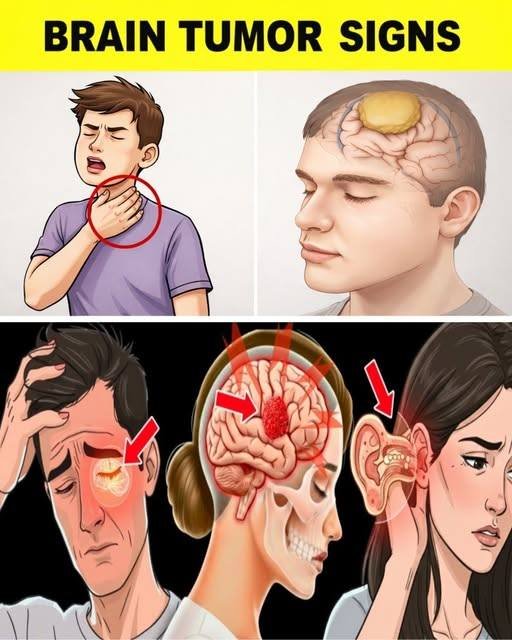
1. Persistent Headaches
A common symptom, but not all headaches are caused by brain tumors. However, if you have frequent or severe headaches that feel different from your usual headaches—especially if they worsen over time or happen early in the morning—this could be a red flag.
2. Vision Problems
Brain tumors can affect the parts of the brain that process vision, leading to blurred vision, double vision, or even loss of peripheral vision. If you experience sudden changes in your eyesight, such as seeing flashing lights or blurred images, it could indicate pressure on the optic nerve.
3. Seizures
Seizures are a common symptom of brain tumors, particularly in the early stages. These can manifest as unusual twitching, jerking, or convulsions, and might not always be dramatic—sometimes just a feeling of a “sudden electrical shock” or “staring spells.”
4. Memory Loss or Difficulty Thinking
A brain tumor, depending on its location, can impair cognitive functions. If you experience difficulty remembering things, trouble concentrating, or sudden confusion, it could indicate that a tumor is affecting the part of your brain responsible for memory and thought processing.
5. Nausea or Vomiting
Nausea, especially if it’s unexplained and persistent, can sometimes be related to increased intracranial pressure. This might be more pronounced in the morning or after a sudden movement, as the pressure inside the skull fluctuates.
6. Balance and Coordination Issues
A tumor in certain areas of the brain, like the cerebellum (responsible for balance), can affect your ability to walk or coordinate your movements. If you find yourself frequently losing your balance, tripping, or feeling unusually unsteady, it could be a sign.
7. Personality or Behavioral Changes
Changes in mood, personality, or behavior—such as becoming unusually irritable, withdrawn, or anxious—can be an indication that the tumor is affecting the brain’s frontal lobe, which governs personality and emotions.
8. Weakness or Numbness in Limbs
A tumor in the brain can press on certain parts of the body’s motor cortex, leading to weakness, numbness, or tingling in your arms, legs, or face. This can be one-sided (affecting just one arm, leg, or side of your face), and it might come on gradually or suddenly.
9. Speech Difficulties
A tumor in the speech centers of the brain can cause difficulty speaking clearly, finding the right words, or understanding language. If you experience slurred speech or find yourself struggling to communicate in ways you haven’t before, it’s worth seeking medical advice.
10. Hearing Loss or Ringing in the Ears (Tinnitus)
Tumors near the auditory nerves (like acoustic neuromas) can cause hearing loss or a persistent ringing in the ears (tinnitus). If you start experiencing hearing problems or strange noises in your ears without an obvious cause, it’s important to get checked out.
What to Do If You Notice These Symptoms:
If you’re experiencing any of these symptoms—especially if they’re new, persistent, or getting worse—it’s important to see a doctor promptly. A neurologist can perform diagnostic tests, such as MRI scans or CT scans, to determine if a brain tumor is present.
Key Things to Remember:
-
Not all headaches or memory issues indicate a brain tumor, but it’s still good to pay attention to any sudden or dramatic changes.
-
Early detection is crucial in improving the outcome for many types of brain tumors, so if you’re concerned, don’t hesitate to seek medical advice.
Do any of these symptoms sound familiar, or do you have any concerns you’d like to explore further?