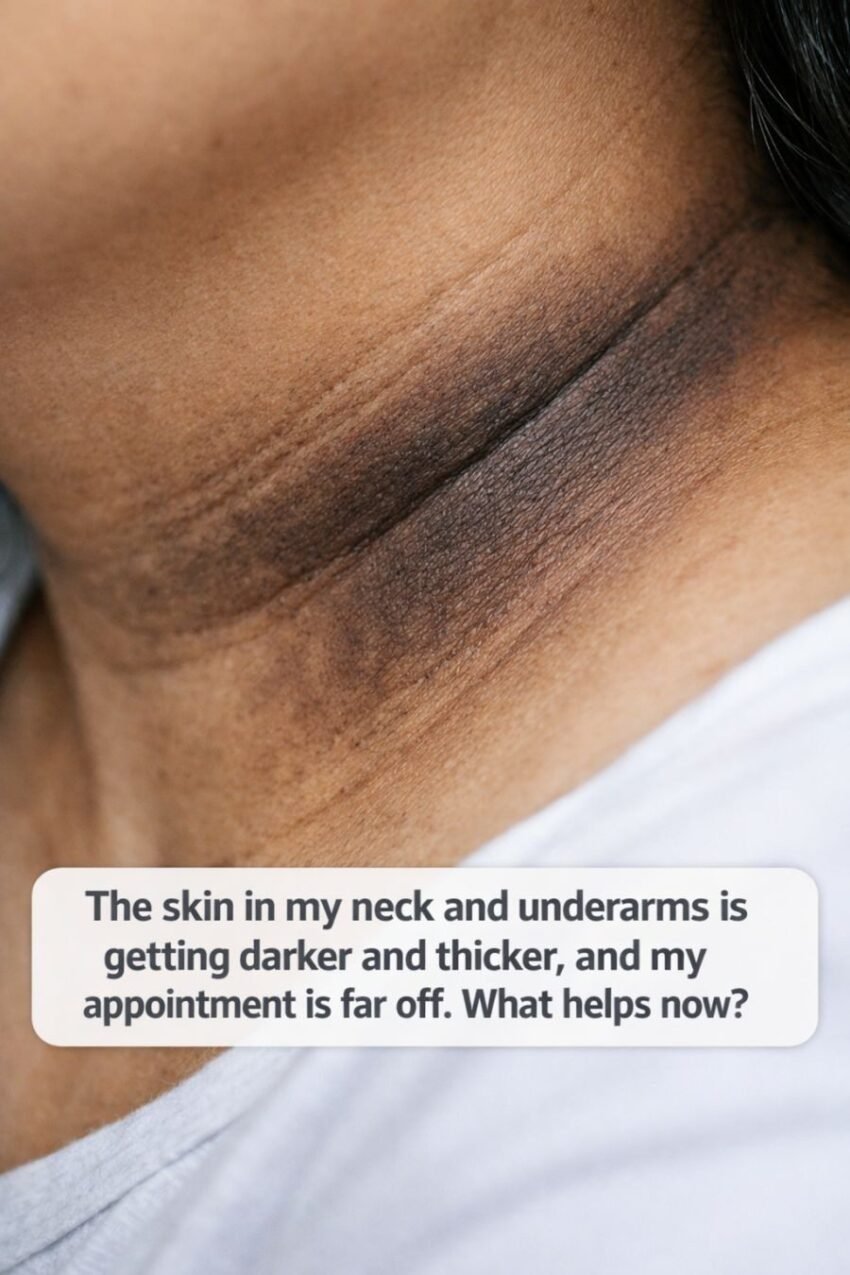
-
Velvety or slightly raised
-
Brown/grayish
-
Harder or thicker than surrounding skin
-
Gradual in onset
This is often linked to insulin resistance, prediabetes, PCOS, or weight gain — but it can also happen with friction, hormones, or certain medications.
Since your appointment is far off, here’s what you can safely do now:
🚨 First: Quick Self-Check
Seek urgent care sooner if you notice:
-
Sudden rapid spread
-
Severe itching or pain
-
Skin tags appearing quickly
-
Unexplained weight loss
If not, it’s usually not an emergency.
What Helps Right Now
1️⃣ Reduce Friction
-
Wear loose clothing
-
Avoid harsh scrubbing
-
Don’t use strong deodorants on irritated skin
Friction makes thickening worse.
2️⃣ Gentle Chemical Exfoliation (Best Home Option)
Look for lotions containing:
-
Lactic acid (5–10%)
-
Glycolic acid
-
Urea (10–20%)
Use once daily at night.
These help thin thickened skin gradually.
Avoid scrubs. They worsen it.
3️⃣ Moisturize Daily
Dry skin makes the thick texture more obvious.
Use:
-
Thick fragrance-free cream
-
Apply after shower while skin is slightly damp
4️⃣ If You May Have Insulin Resistance
Even small steps help:
-
Reduce sugary drinks
-
Limit refined carbs (white bread, pastries, soda)
-
Walk 20–30 minutes daily
-
Add protein to meals
Improving insulin sensitivity often lightens the skin over weeks to months.
5️⃣ What NOT to Do
-
❌ Lemon juice
-
❌ Baking soda scrubs
-
❌ Toothpaste
-
❌ Bleaching creams not meant for body
-
❌ Strong steroid creams without prescription
These can cause burns or worsen pigmentation.
When It Improves
If insulin resistance is the cause:
-
Texture improves first
-
Color lightens slowly over 2–6 months
It doesn’t fade overnight — but it does improve.
If you’re comfortable sharing:
-
Has your weight changed recently?
-
Any family history of diabetes?
-
Do you have irregular periods (if applicable)?
That helps narrow down the likely cause and what will work best for you.