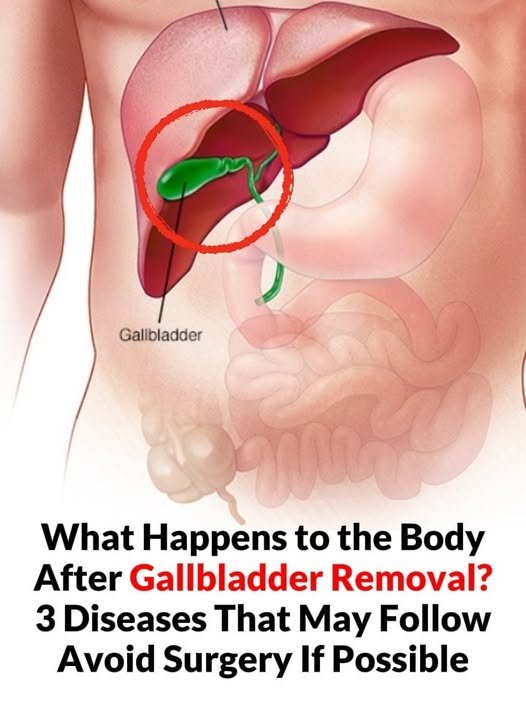
Headlines like this are often alarmist.
Gallbladder removal (called Cholecystectomy) is one of the most common and generally safe surgeries. Millions of people live completely normal lives without a gallbladder.
That said, your body does change after removal — because bile no longer gets stored and released in controlled amounts.
🫀 What Actually Happens After Gallbladder Removal?
The gallbladder stores bile made by the liver. After surgery:
- Bile flows continuously into the small intestine.
- Fat digestion still happens — but less efficiently for large fatty meals.
- Some people notice temporary digestive changes.
Most symptoms improve within weeks to months.
⚠️ 3 Conditions That Can Occur After Gallbladder Removal
1️⃣ Post-Cholecystectomy Syndrome (PCS)
- Ongoing bloating, diarrhea, abdominal discomfort
- Happens in a small percentage of patients
- Often manageable with diet changes
2️⃣ Bile Acid Diarrhea
- Excess bile entering the colon can cause chronic loose stools
- Treatable with bile-binding medications if needed
3️⃣ Increased Risk of Certain Digestive Issues
Some studies suggest a slightly higher risk of:
- Acid reflux
- Small intestinal bacterial overgrowth (SIBO)
- Changes in gut microbiome
These are not guaranteed, and most people do not develop serious disease.
🚨 Should You “Avoid Surgery If Possible”?
That depends.
Surgery is usually recommended for:
- Recurrent gallstones
- Gallbladder inflammation
- Gallstone pancreatitis
- Severe pain attacks
Untreated gallbladder disease can lead to:
- Infection
- Pancreatitis
- Life-threatening complications
In those cases, surgery is often safer than waiting.
🥗 How to Support Your Body After Surgery
If you’ve had removal (or are planning it):
- Eat smaller, lower-fat meals at first
- Gradually reintroduce healthy fats
- Increase fiber slowly
- Stay hydrated
- Avoid very greasy foods early on
Most people adapt well within 3–6 months.
Bottom Line
Gallbladder removal is not harmless, but it’s also not something to fear if medically necessary. Serious long-term diseases are uncommon.
If you’d like, tell me:
- Are you considering surgery?
- Do you currently have gallstones?
- What symptoms are you experiencing?
I can help you think through it realistically — without fear-based headlines.